How much protein do you need per day?
A simple guide to setting a daily protein goal for fat loss, muscle gain, better meals, and more consistent nutrition tracking.
Logly
Food tracking guides
Protein is one of the most discussed and most misunderstood nutrients in nutrition. Some people believe you need enormous amounts to see any benefit. Others think any amount is fine as long as calories are right. The truth sits between these positions, and getting a reasonable grip on it has practical implications for hunger management, body composition, and training recovery.
You do not need a perfect protein number to start making progress. You need a realistic target you can hit most days with the foods you actually eat, and a way to track whether you are getting there.
Why protein matters more than most people realize
Protein is the only macronutrient that directly contributes to muscle tissue. Every time you train, your muscles sustain small amounts of damage. Dietary protein provides the amino acids needed to repair and build those muscles. Without adequate protein, recovery is slower, muscle growth is limited, and muscle loss during calorie restriction is more pronounced.
But protein's benefits are not limited to people lifting weights. Protein has the highest satiety per calorie of any macronutrient. A high-protein meal keeps you full for longer than the same calories from carbohydrates or fat. This is one reason that increasing protein intake is often the single most effective dietary change people can make when trying to reduce overall food intake without feeling deprived.
- Supports muscle repair and growth after training.
- Reduces muscle loss during weight loss — critical for maintaining strength and metabolism.
- Creates more satiety per calorie than carbs or fat, reducing overall hunger.
- Has a higher thermic effect — your body burns more calories digesting protein than other macros.
- Helps maintain bone density over time.
- Supports immune function and hormone production.
How much protein do you actually need?
The answer depends on your goal, body weight, and activity level. The general population minimum recommended to prevent deficiency is much lower than what research suggests is optimal for body composition and health. Most people who are active and care about their physique will benefit from eating significantly more than the minimum.
| Goal / situation | Recommended protein intake | Example for 70kg person |
|---|---|---|
| Sedentary adult, minimum | 0.8g per kg body weight | ~56g per day |
| Moderately active adult | 1.2–1.6g per kg | 84–112g per day |
| Weight loss (active) | 1.6–2.2g per kg | 112–154g per day |
| Muscle gain (training) | 1.6–2.4g per kg | 112–168g per day |
| Older adults (50+) | 1.6–2.0g per kg | 112–140g per day |
These ranges reflect current research consensus. The higher end of each range is not harmful and may be beneficial, particularly for people in a calorie deficit or doing significant amounts of resistance training. The lower end of each range is a practical minimum for that goal.
A simple starting point
If calculating grams per kilogram feels like too much to start with, use this rule: include a clear protein source at every meal — eggs, meat, fish, dairy, legumes — and track whether you are consistently hitting your target. Most people who do this are already above the minimum optimal range.
Protein for weight loss
When you are in a calorie deficit, your body is not only burning fat — it is also at increased risk of breaking down muscle tissue for energy. Adequate protein intake significantly reduces this muscle loss, which matters both for how you look and for your long-term metabolism. More muscle means a higher resting metabolic rate, which makes maintaining weight loss easier over time.
High protein also makes dieting more sustainable. When you are eating less, feeling hungry is the main force that pushes you off track. Protein-rich meals reduce hunger for longer, meaning you can be in a calorie deficit without feeling miserable most of the time.
Research consistently shows that higher protein diets produce better body composition outcomes during weight loss — more fat lost, less muscle lost — compared to lower protein diets at the same calorie deficit.
Protein for muscle gain
For muscle gain, total calories above maintenance and consistent resistance training are the two most important factors. Protein is the third. Without adequate protein, your body cannot build new muscle tissue efficiently even if training and calorie surplus are in place.
The research suggests that most of the muscle-building benefit from protein is captured at around 1.6–2.0g per kg of body weight per day. Eating significantly more than this is not harmful, but it is likely producing diminishing returns for muscle growth specifically — extra protein beyond your needs will simply be used for energy like other calories.
Best high-protein foods for everyday eating
The best protein sources are the ones you actually enjoy eating and can include in your regular meal routine. You do not need to eat chicken breast and protein shakes every day to hit your protein target.
- Eggs — about 6g of protein each, versatile and inexpensive.
- Greek yogurt — 15–20g per serving, works for breakfast, snacks, or sauces.
- Cottage cheese — underrated source with 20–25g per cup.
- Chicken breast — lean and high-protein at about 31g per 100g.
- Tuna — convenient and one of the highest protein-per-calorie foods available.
- Lean beef and turkey — good protein with iron and B vitamins.
- Beans and lentils — 15–20g per cooked cup, also high in fiber.
- Skyr or Icelandic yogurt — similar to Greek yogurt, very high protein.
- Protein powder — convenient supplement, not a requirement.
- Cheese — contributes meaningful protein alongside fat.
How to spread protein across the day
Research suggests that muscle protein synthesis — the process of building muscle — is maximized when protein is spread relatively evenly across meals rather than consumed mostly in one sitting. Practically, this means trying to include a protein source at breakfast, lunch, and dinner rather than skipping protein early in the day and trying to compensate at dinner.
- Breakfast: eggs in any form, Greek or Icelandic yogurt, cottage cheese, protein oats with dairy or protein powder.
- Lunch: chicken, tuna, lean beef, beans or lentil dishes, a yogurt-based sauce on the side.
- Dinner: any meat, fish, or egg-based dish, or legume-based meals like dal or bean stew.
- Snacks (if needed): a protein shake, boiled eggs, cottage cheese, Greek yogurt, or tuna with crackers.
Signs you might not be eating enough protein
Low protein intake has symptoms that many people attribute to other causes. If you frequently experience any of the following and your diet is generally healthy, increasing protein intake is worth trying:
- Constant hunger despite eating enough calories.
- Difficulty recovering from training sessions.
- Losing strength or muscle despite maintaining weight.
- Slow wound healing.
- Frequent cravings, especially for high-calorie foods.
- Difficulty maintaining muscle during weight loss.
How Logly helps with protein tracking
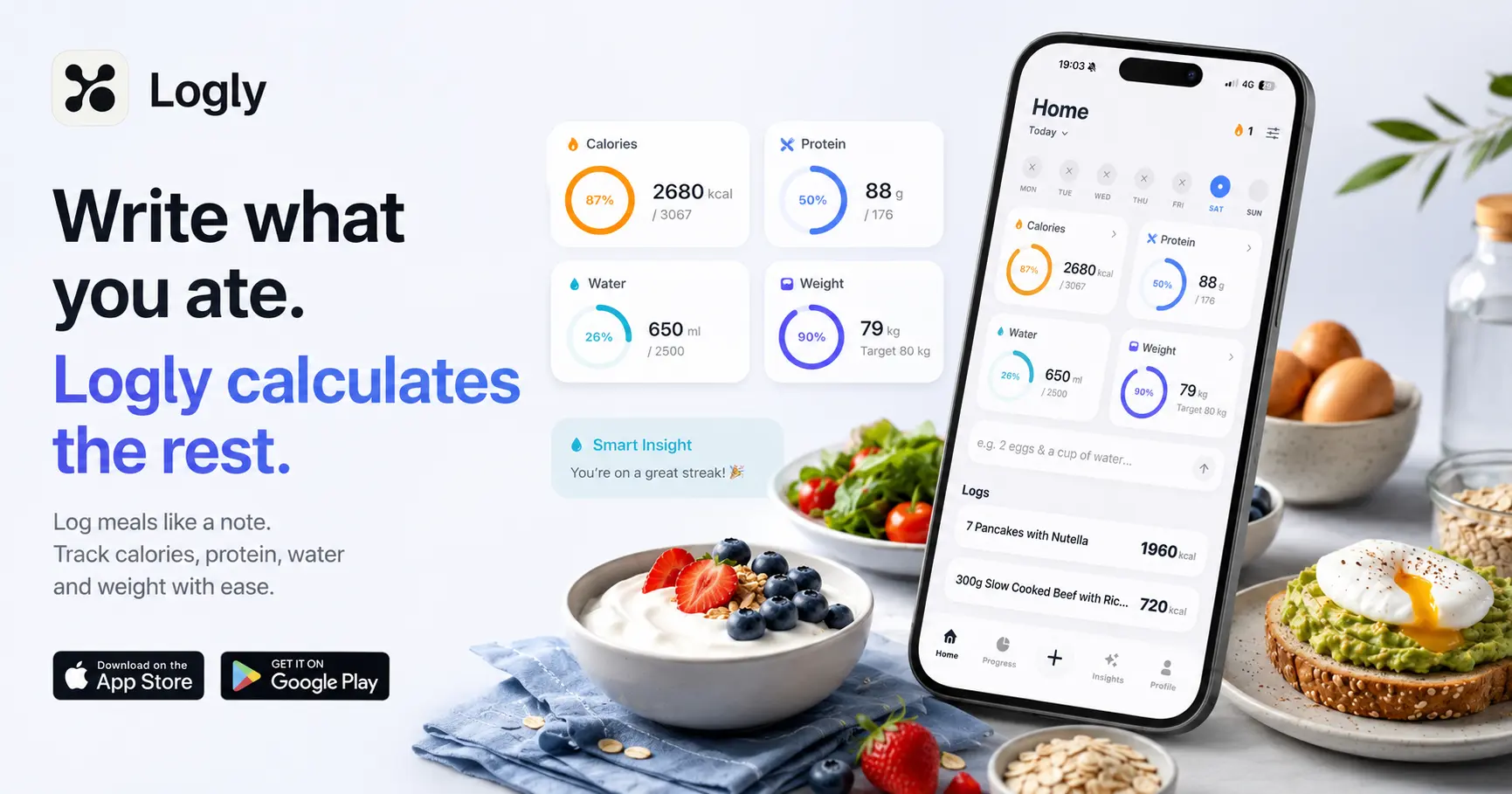
Logly estimates protein from your meal notes and shows your daily and weekly protein progress. Instead of manually calculating every ingredient, you describe what you ate and Logly handles the estimates — making it easy to see whether you are consistently hitting your protein target without the tracking becoming a burden.
FAQ
Do I need protein powder to hit my daily protein goal?
No. Protein powder is a convenient supplement, but all your protein needs can be met through whole foods like eggs, yogurt, meat, fish, dairy, beans, and lentils. Protein powder is useful when whole food options are inconvenient or when you are significantly below your daily target and want a quick way to close the gap.
Is too much protein harmful?
For most healthy adults, consuming protein up to around 3g per kg of body weight per day is safe. Beyond that, evidence for safety is limited but most research suggests high protein intake does not cause kidney damage in people with healthy kidneys. People with existing kidney conditions should consult a doctor about protein intake.
Can I get enough protein as a vegetarian?
Yes. Eggs, dairy (yogurt, cottage cheese, cheese), beans, lentils, chickpeas, tofu, tempeh, edamame, and seitan are all viable protein sources for vegetarians. Hitting higher protein targets requires more intentional planning on a vegetarian diet, but it is achievable without supplements.
Does protein timing matter?
Spreading protein across meals matters more than any specific timing rule. The old idea that you must eat protein immediately after a workout has been largely debunked for most people. What matters is hitting your daily total and distributing it relatively evenly, not the specific window around training.
Track meals faster
Food tracking should feel simple.
Logly helps you log meals with AI, track calories and macros, follow your weight trend, add progress photos, and stay consistent without making nutrition feel like homework.
Related guides