How to use a calorie tracker for weight loss (a realistic guide)
A practical guide to using a calorie tracker for weight loss without obsessing over perfect numbers or making every meal feel complicated.
Logly
Food tracking guides
Calorie tracking is one of the most evidence-backed strategies for weight loss. That is not a controversial statement — it is well-supported by research across dozens of studies. But the way most people implement it makes it unnecessarily stressful, rigid, and unsustainable.
Effective calorie tracking for weight loss does not require perfection. It requires consistent awareness, honest logging, and the ability to adjust based on feedback. This guide explains how to make tracking work for weight loss in a way that you can actually maintain long enough to see results.
Why calorie tracking works for weight loss
Weight loss requires a calorie deficit: consuming fewer calories than your body expends over time. This is a basic physiological reality that does not change regardless of the diet approach you follow. Keto, intermittent fasting, low-fat diets, Mediterranean diets — they all work for weight loss when they create a consistent calorie deficit. The diet approach is mostly about which way of eating makes it easiest for you to maintain that deficit.
Calorie tracking makes the deficit visible and manageable. Instead of guessing whether you are in a deficit, you have a number. Instead of wondering why the scale is not moving, you have data to investigate. This visibility is the core value of tracking — not the act of logging itself, but the awareness and feedback it creates.
Start with awareness, not perfection
The most common mistake people make when starting to track calories for weight loss is trying to be perfect from the first day. They log every meal to the gram, feel guilty when they miss a log, abandon their target on a difficult day, and conclude that tracking does not work for them.
A better starting approach is to track for awareness first. For the first week or two, log every meal without a specific calorie target. Just understand what you are actually eating. Most people discover significant surprises — foods they thought were low-calorie that are not, portion sizes that are larger than they assumed, liquid calories they had completely ignored.
This awareness phase transforms the subsequent tracking into an informed practice rather than an arbitrary set of rules. When you set a calorie target after understanding your baseline, it feels realistic rather than restrictive.
Setting a realistic calorie target
A moderate calorie deficit produces more sustainable weight loss than an aggressive one. A deficit of 300 to 500 calories per day will typically produce 0.3 to 0.5 kg of fat loss per week. This rate is slow enough to preserve muscle mass, maintain energy levels, and remain compatible with normal social eating.
Aggressive deficits of 700 to 1000 calories per day produce faster initial results but are harder to sustain, produce more muscle loss, and often lead to rebound eating when they inevitably break down. For most people, the tortoise wins: a moderate, sustainable deficit over 12 to 24 weeks produces better long-term outcomes than aggressive cutting followed by regain.
Track protein too — it makes the deficit easier
When you are in a calorie deficit, protein becomes more important, not less. Adequate protein intake during weight loss serves two critical functions: it preserves muscle mass that would otherwise be broken down for energy, and it creates significantly more satiety per calorie than carbohydrates or fat, making the deficit easier to maintain.
Aim to include a protein source at every meal. When your calorie budget is smaller than usual, allocating a higher percentage of those calories to protein means you stay fuller for longer on fewer calories. This is one reason high-protein diets tend to outperform low-protein diets at the same calorie deficit in research.
The most commonly missed calorie sources
Consistent calorie tracking failures — where the scale does not move despite hitting the calorie target — usually come down to a small number of consistently underlogged or forgotten sources:
- Sugary drinks: soft drinks, juices, sweetened coffees, and alcohol are the most frequently forgotten calorie sources.
- Coffee and tea additions: milk, cream, and sugar in multiple daily coffees add up faster than expected.
- Cooking oil and butter: easy to forget when describing a dish, but a significant calorie contributor.
- Sauces and dressings: a generous serving of salad dressing or a cream-based sauce can add 150–250 calories.
- Mindless snacking: handfuls of nuts, a few biscuits, a spoonful of peanut butter not counted as a snack.
- Tasting while cooking: this genuinely adds meaningful calories over the course of a meal prep session.
- Weekend eating: many people track well from Monday to Friday and have significantly higher intake on weekends that they do not log.
Watch the weekly trend, not the daily number
Body weight fluctuates naturally by one to three kilograms day to day based on water retention, sodium, carbohydrates, hormones, and gut contents. Reacting to a single day's weight reading is almost always misleading. A weight that is up 1kg on Monday might be down 1.5kg by Thursday without any meaningful change in fat.
The useful signal is the weekly average trend. If your average weight this week is lower than your average weight last week, fat loss is occurring — even if individual days show increases. Track your weight daily or most days of the week, then look at the weekly average rather than individual readings.
Weekly trend is the real signal
A weight up 0.5kg on Wednesday means nothing on its own. A weekly average that has trended down by 0.3kg per week for four weeks means your system is working. Focus on the trend, not the daily number.
How long should you track calories?
The goal of calorie tracking is not to track forever. The goal is to build enough awareness of your eating habits that you can maintain your results with less active monitoring. Most people find that after two to four months of consistent tracking, they have a sufficiently accurate mental model of their intake to manage their weight without logging every meal.
Until that awareness is built, tracking is the fastest way to understand what is happening. Think of calorie tracking as a temporary precision tool that you use intensively during an active weight loss phase, then use more casually or periodically for maintenance.
Use progress photos alongside the scale
Scale weight plateaus happen during genuine fat loss due to water retention changes and other factors. Progress photos every two to four weeks give you a secondary data source that shows body composition changes the scale may be temporarily masking. If the scale is flat but photos show visible changes, your plan is working — the scale will catch up.
How Logly supports weight loss
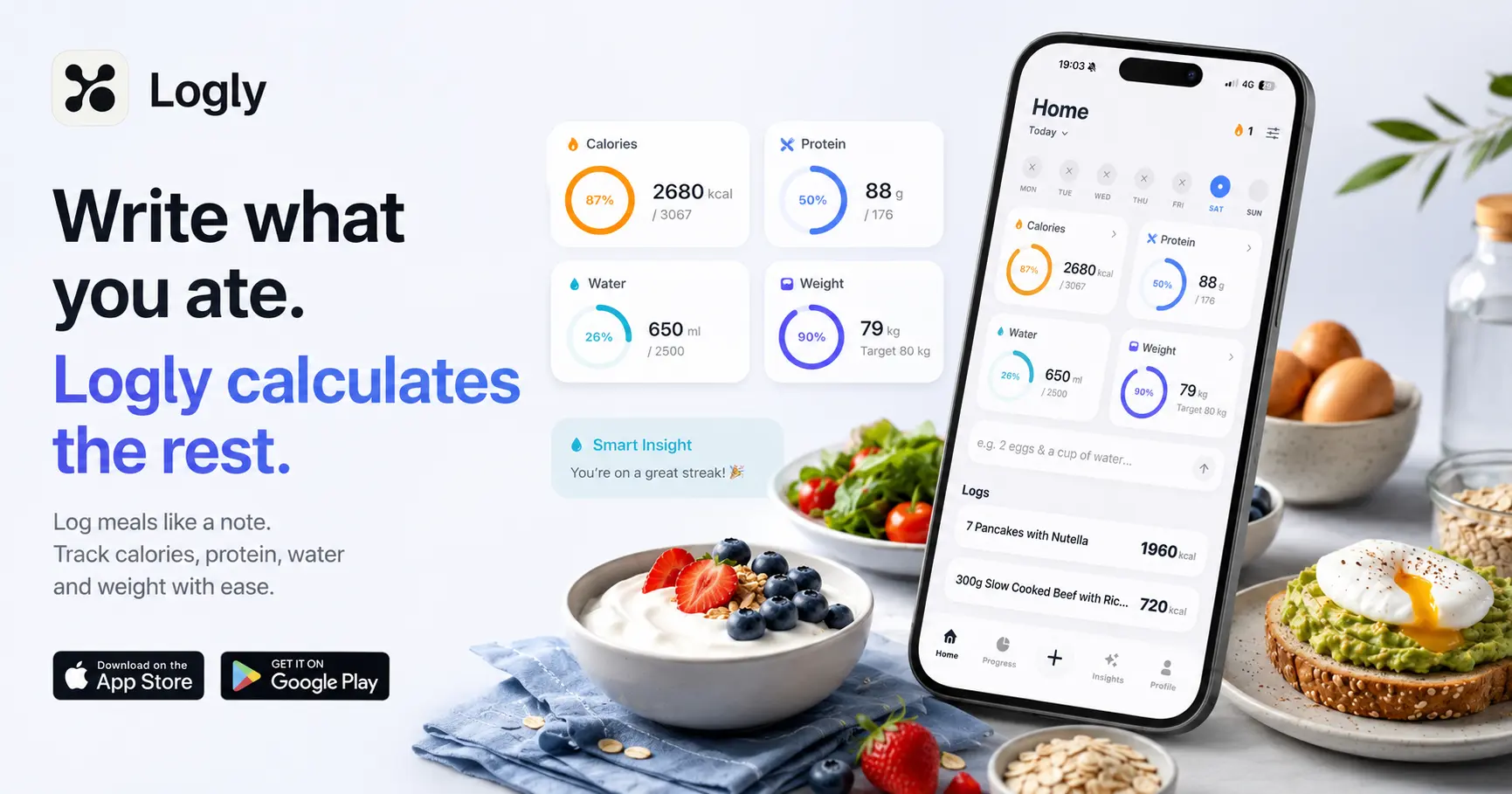
Logly is built for the kind of practical weight loss tracking described in this guide. You log meals with AI — fast natural language descriptions rather than slow database searches. You track calories, macros, and protein. You monitor water intake, log your weight daily or a few times per week, take progress photos, and track measurements. Weekly insights show your average intake, protein consistency, and weight trend in one view.
FAQ
How many calories should I eat to lose weight?
Your maintenance calorie needs depend on your size, age, sex, and activity level. A simple starting approach is to track your normal eating for one to two weeks without changing anything, find your average daily intake, then subtract 300 to 500 calories from that average to create a moderate deficit. Adjust based on your weight trend over the following three to four weeks.
What if the scale does not move despite tracking?
First, check for the commonly missed calorie sources listed above. Second, check whether you are using honest portion estimates or optimistic ones. Third, consider whether weekend eating is offsetting weekday deficits. Fourth, check your weekly average weight trend rather than daily readings — you may be making progress that daily fluctuations are hiding.
Should I count exercise calories?
Be cautious with exercise calorie estimates from apps and devices — they tend to overestimate significantly. A common approach is to ignore exercise calories in your tracker and simply let them contribute to the deficit rather than using them as permission to eat more. If you are very active, set a higher base calorie target that accounts for your activity level rather than adding exercise calories on top of a sedentary target.
Track meals faster
Food tracking should feel simple.
Logly helps you log meals with AI, track calories and macros, follow your weight trend, add progress photos, and stay consistent without making nutrition feel like homework.
Related guides