How to track homemade food calories without overthinking it
Homemade meals are hard to track because recipes, portions, and ingredients vary. Here is a realistic way to estimate and log them without losing your mind.
Logly
Food tracking guides
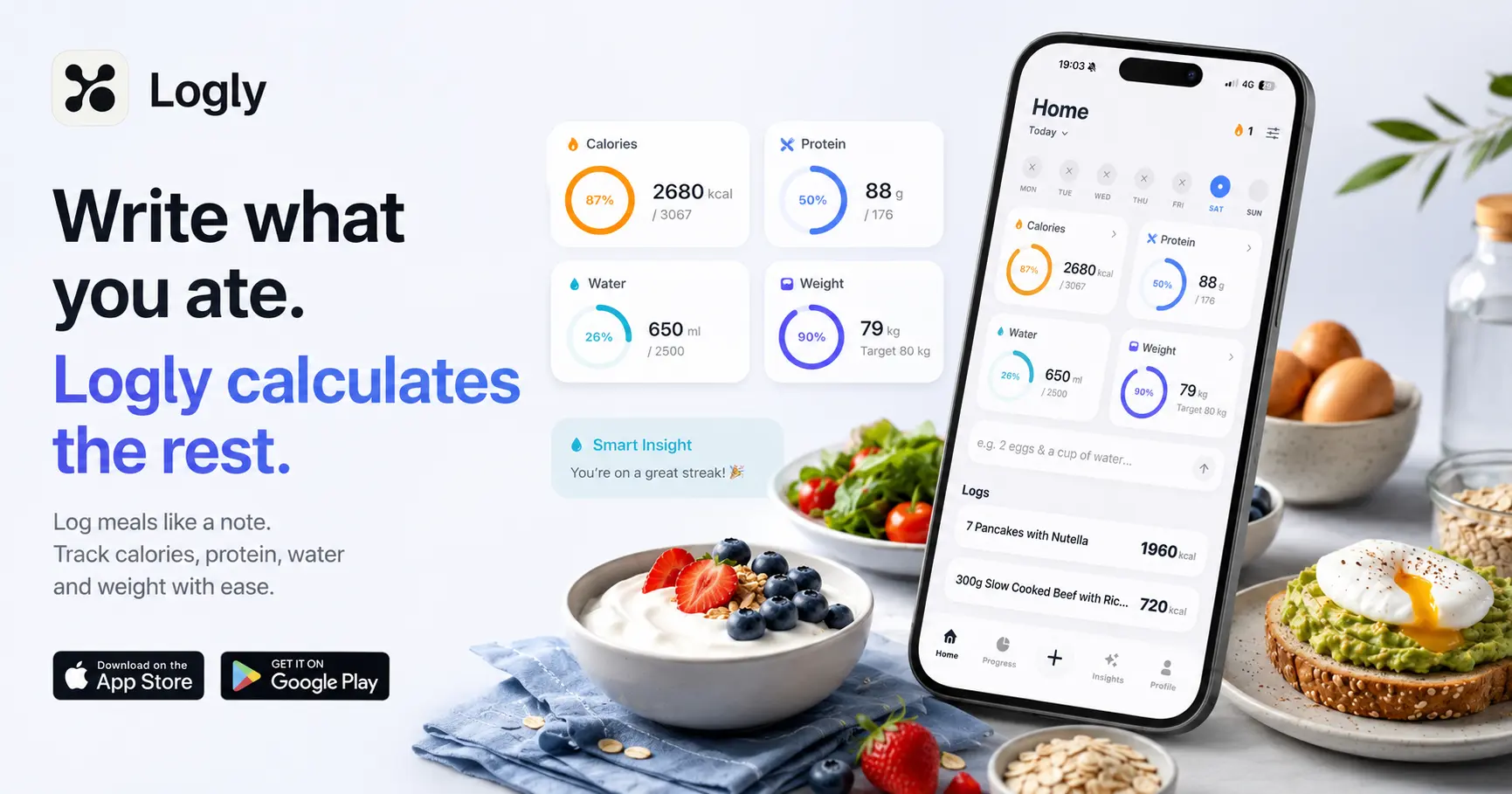
Homemade food is one of the most nutritious things you can eat, and one of the hardest things to track. Unlike a packaged product with a label or a restaurant with a published nutrition menu, homemade meals have no fixed recipe, no standard portion, and no single calorie count. The same dish made by two different people in two different households might vary by hundreds of calories.
This variability is exactly why many calorie trackers fail people who cook at home. Searching a database for "homemade pasta" and hoping the entry matches how you actually made it is not tracking — it is guessing with extra steps. Tracking homemade food effectively requires a different approach.
Why homemade food tracking fails in traditional apps
Traditional calorie counting apps are built around packaged and restaurant foods. Their databases have excellent coverage for a box of cereal, a branded protein bar, or a chain restaurant meal. They have poor coverage for the way most people actually cook.
When you search for a homemade dish in a traditional app, you typically find user-submitted entries that may or may not resemble what you cooked. Different users have submitted entries for "chicken rice" that range from 350 to 900 calories per serving, with no way to know which is closer to your version. You either pick one arbitrarily, spend time building a custom recipe from every ingredient, or give up and skip the log.
AI food tracking solves this by letting you describe the meal as you actually made it, with the ingredients and proportions that characterized your specific version. The AI then estimates based on your description rather than a generic database entry.
Start with the ingredients that drive most of the calories
You do not need to account for every ingredient in a homemade meal to get a useful estimate. Most meals derive the majority of their calories from a small number of components. Identify and log those components, and you have captured the bulk of the nutritional information.
- Protein source: chicken, beef, eggs, fish, beans, tofu, cheese. This sets the protein and calorie base.
- Carbohydrate source: rice, pasta, bread, potatoes, dough, pastry, oats. This is often the largest calorie contributor.
- Fat source: cooking oil, butter, cream, cheese, nuts, seeds. This is where estimates go most wrong.
- Sauces and additions: cream sauce, cheese sauce, tomato sauce, yogurt, tahini, honey.
- Extras: bread on the side, a drink, dessert, an extra serving.
The oil problem in homemade food tracking
Cooking oil is the most consistently underestimated calorie source in homemade meals. A single tablespoon of olive oil contains about 120 calories. Many homemade dishes use two, three, or four tablespoons of oil in the cooking process — and most people, when describing a dish, do not think to mention the oil at all.
This creates a systematic bias where homemade meal estimates are consistently too low, not because the AI made an error, but because the oil was not included in the description. Get in the habit of noting when a dish was cooked in oil or butter, and roughly how much. "Stir fried in a good amount of oil" is enough information for the AI to adjust the estimate upward.
The single most common tracking mistake
Forgetting to mention cooking oil. If you fried, sautéed, or roasted something, the oil matters. A dish 'fried in olive oil' can be 200–400 calories higher than the same dish steamed or boiled. Always include it.
Estimate your portion honestly
The second most common error in homemade food tracking is portion underestimation. People who serve themselves tend to describe their portion as 'normal' or 'medium' when it is objectively large. This is not dishonesty — it is a well-documented psychological phenomenon where our own serving is our baseline for normal.
A useful calibration: if you have a large dinner plate rather than a smaller one, if you filled it to the edges rather than leaving space, if you went back for more, or if the serving was noticeably larger than what you would give to a guest — it is probably a large portion, not a medium one.
Honest portion descriptions lead to better estimates. "Generous serving" or "larger than usual" in your log description will produce a more accurate calorie estimate than "medium" when medium is actually large.
Build a log for your repeat meals
Most people eat a relatively small repertoire of homemade meals. You might rotate through ten to twenty dishes regularly, and within that set, certain meals appear multiple times per week. Tracking gets significantly easier once you have logged a meal a few times and developed a sense of what a reasonable estimate looks like.
If you use an AI tracker, this also means your estimates improve over time. As you refine how you describe your specific version of a dish — noting the oil, the portion size, the specific ingredients you use — the estimates become a better reflection of what you actually ate.
Specific Balkan and regional foods
Regional foods are a particular challenge for database-based trackers because they are underrepresented in Western-built databases. Burek, sarma, tavče gravče, gyoza, injera, shakshuka, biryani — these are everyday foods for millions of people but rare or absent in most major calorie tracking databases.
AI food trackers handle regional foods better than databases do, because they work from the description of the food and its components rather than requiring a specific database entry. A detailed description of the dish — main ingredients, cooking method, rough portion — gives the AI enough context to produce a reasonable estimate for most regional dishes.
When to use a recipe builder vs natural language logging
Recipe builders in calorie tracking apps let you enter every ingredient in a recipe, set the total yield, and log a portion as a fraction of the whole. This is highly accurate and worth using when you cook the same large-batch recipe regularly — a pot of soup, a baked casserole, a batch of meal prep.
Natural language AI logging is better suited for one-off meals, improvised cooking, and dishes where you did not follow a recipe. The choice is not either/or — use the recipe builder for your most-logged reliable recipes and natural language for everything else.
How Logly handles homemade food
Logly is designed with homemade food in mind. Instead of relying on a database, you describe your meal naturally — name the dish, list the main ingredients, mention the cooking method and oil, and give a rough portion estimate. Logly estimates the calories, protein, carbs, fat, and other nutritional details from your description.
This works for homemade dishes across all cuisines, including Balkan food, Mediterranean cooking, Asian dishes, and anything else you might cook at home. If you can describe it, Logly can estimate it.
FAQ
Do I need recipes to track homemade meals?
No. You can get a useful estimate from a description of the main ingredients, portion size, and cooking method without a formal recipe. For frequently repeated meals, noting the main components and rough portion is enough to track consistent patterns over time.
Should I count cooking oil when tracking homemade food?
Yes, especially for fried, sautéed, or roasted dishes. Cooking oil is one of the most calorie-dense ingredients per gram and one of the most consistently forgotten. Including a note about the cooking fat in your meal description significantly improves estimate accuracy.
How accurate is AI tracking for homemade food?
The accuracy depends on the quality of the description. A detailed description that includes the main ingredients, cooking fat, and portion size will produce a much better estimate than a single word or dish name. For most homemade meals with a clear description, AI estimates are within a reasonable margin for practical tracking purposes.
Track meals faster
Food tracking should feel simple.
Logly helps you log meals with AI, track calories and macros, follow your weight trend, add progress photos, and stay consistent without making nutrition feel like homework.
Related guides