Weekly fitness insights: how to understand what your data is telling you
Weekly insights help you see patterns in calories, protein, water, weight, and consistency so you can make better decisions — not just collect more numbers.
Logly
Food tracking guides
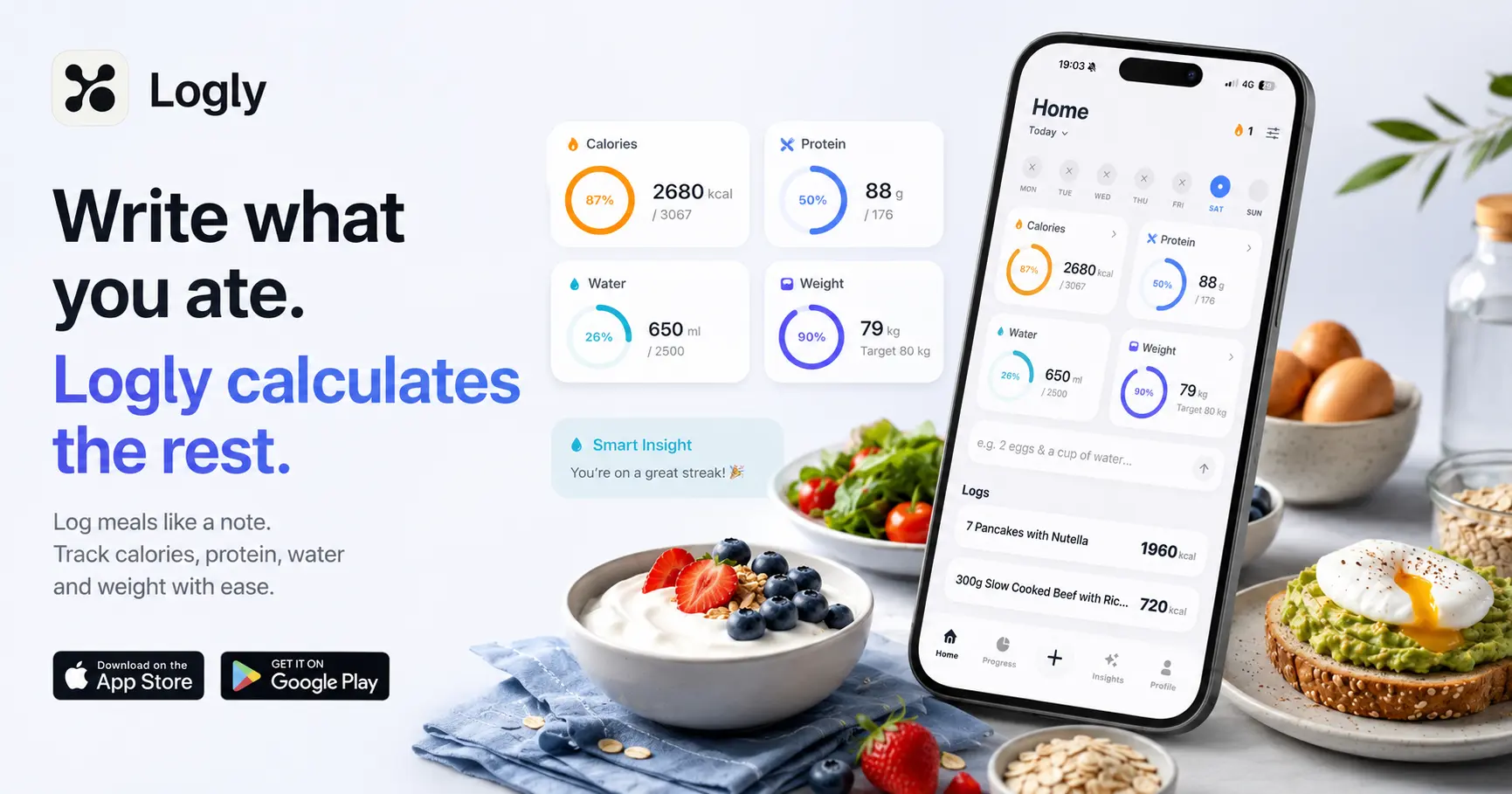
Daily nutrition tracking gives you data. Weekly insights give you understanding. The difference is significant. A single day's calorie log tells you what happened on that day. A week's worth of data tells you what is actually happening in your habits — the patterns, the blind spots, the wins, and the adjustments that will make the next week more effective.
This is why the most useful calorie and nutrition trackers are not the ones with the most granular daily data — they are the ones that synthesize that data into weekly insights that you can actually act on.
Why daily data misleads and weekly data informs
Daily metrics are affected by too much noise to be reliable decision-making tools. Your calorie count on any given day is affected by social events, schedule disruptions, unusual hunger, a bad mood, or simply having a different breakfast than usual. Your weight on any given day is affected by water retention, sodium, hormones, sleep quality, and gut contents. Reacting to these daily fluctuations with changes to your plan is usually counterproductive.
Weekly averages smooth out most of this noise. Your average calories over seven days are a much more accurate reflection of your habitual intake than any single day. Your average weight over a week, compared to the previous week, is a much more reliable signal of fat loss or gain than a daily weigh-in.
What weekly insights should cover
- Average daily calories for the week and how that compares to your target.
- Average daily protein and how many days you actually hit your protein goal.
- Water consistency — average daily intake and how many days you hit your goal.
- Weight trend — the direction and rate of change across the week.
- Logging consistency — how many meals you logged out of your typical number of daily meals.
- Meal timing patterns — whether you are consistently skipping certain meals or eating unusually large meals at certain times.
- High-calorie days and what characterized them — useful for identifying patterns without judgement.
Understanding your calorie average
Most people's calorie intake is not consistent day to day. Weekdays look different from weekends. High-activity days may involve more appetite than low-activity days. This variation is normal and does not need to be eliminated. What matters is the average.
If your weekly average calories are consistently above your target, the target is not working as a real constraint and needs to be addressed — either by lowering it, improving logging consistency, or identifying which days are driving the excess. If your weekly average is at or below your target, that is the signal that your plan is actually functioning.
Protein consistency is the most actionable metric
Knowing that you hit your protein goal on three out of seven days is more actionable than knowing your average protein was slightly below target. It tells you that you can hit the goal — you have done it three times — but you are not doing it consistently. The question becomes: what was different on the days you hit it versus the days you did not?
Often, protein shortfalls are concentrated in specific meals. Most people miss protein at breakfast, which is the meal where high-protein options require the most intentionality. Identifying "I miss protein at breakfast most days" is a specific, actionable finding. "Add one high-protein food to breakfast" is a specific, actionable response. This is what weekly insights should produce.
A useful insight produces a specific action
The best weekly insight is not a summary of what happened. It is a specific finding that tells you what to do differently next week. 'Your protein was low on five days — add a protein source to your morning meal' is an insight. 'You logged 1,850 calories on average' is data.
Weight trend interpretation
Compare your average weight this week to your average weight last week. Not Monday to Monday, not your highest to your lowest — weekly averages. This comparison removes most of the day-to-day noise and gives you a relatively reliable signal of whether your body weight is moving in the intended direction.
A weekly average change of 0.2 to 0.5 kg in the direction of your goal is a signal that your plan is working. No change over three or four weeks is a signal to adjust. A change in the wrong direction for two consecutive weeks is a signal that something meaningful is off.
Logging consistency matters more than perfect accuracy
A weekly insight showing you logged 5 out of 7 days is telling you that your estimates for those 5 days are accurate, but your weekly picture is incomplete. The two unlogged days could have been your highest-calorie days — social events, restaurant meals, high-stress eating. The absence of data on those days creates a systematic undercount of your actual weekly intake.
Consistent but imperfect logging beats inconsistent but precise logging. An estimate on a difficult day is better than no data. This is one reason why fast, low-friction logging tools produce better real-world tracking outcomes than precise but slow tools.
How Logly generates weekly insights
Logly uses your food logs, water entries, and weight data to generate weekly patterns and summaries. Instead of just presenting raw numbers, the weekly insights identify what is working and what might be worth adjusting — connecting your food habits, hydration, and weight trend in one view.
FAQ
How long should I track before weekly insights become useful?
One week of consistent tracking produces a first useful snapshot. Two to three weeks of data reveals more reliable patterns. After four weeks, the insights become genuinely predictive — you can start to see which behaviors consistently correlate with better or worse weeks.
What should I do when my weekly insights show I am over my calorie target?
First, check logging consistency — if you missed several days, the average is probably underreported. Second, look for specific patterns: high weekend intake, high snack intake, high liquid calorie intake. Third, make one targeted adjustment rather than overhauling everything at once. Small, specific changes compound over time better than dramatic overhauls.
Track meals faster
Food tracking should feel simple.
Logly helps you log meals with AI, track calories and macros, follow your weight trend, add progress photos, and stay consistent without making nutrition feel like homework.
Related guides